Planning to work in Europe is an exciting opportunity, but getting your documents ready is one of the most important steps in the process. Missing paperwork, outdated certificates, or incorrect information can delay your application.
If you are preparing for a European job, knowing the documents required for Europe work visa applications can help you avoid unnecessary delays and submit a complete application.
The exact requirements can vary depending on the country, job role, employer, and type of work permit. However, skilled workers generally need a combination of personal, professional, employment, financial, and travel documents.
What Documents Are Required for a Europe Work Visa?
The documents required for Europe work visa applications generally include documents that prove your identity, qualifications, employment, and eligibility to work in the destination country.
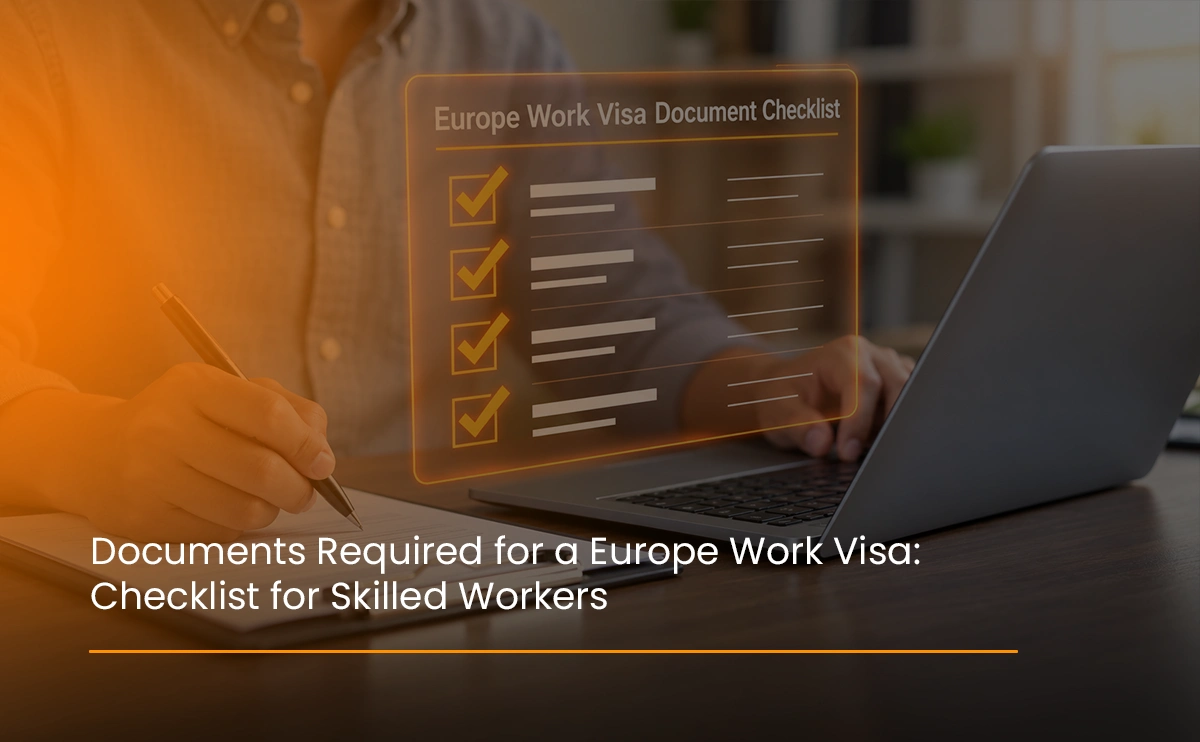
A typical checklist may include:
- Valid passport
- Completed visa application form
- Recent passport-size photographs
- Employment contract or job offer letter
- Educational certificates
- Professional qualification certificates
- Work experience letters
- Updated CV or resume
- Proof of accommodation
- Health insurance, where applicable
- Police clearance certificate, where required
- Proof of financial means
- Medical certificate, where required
- Work permit approval or supporting documents from the employer
- Proof of payment of visa or application fees
Not every applicant will need every document. Your destination country’s immigration authority or consulate will determine the final requirements.
1. Valid Passport
Your passport is one of the most important documents in your Europe work visa application.
Make sure your passport is valid for the required period and has sufficient blank pages for visa processing and travel. Some countries may also require copies of previous passports or previous visas.
Before submitting your application, check that the personal information on your passport matches the information on your application and employment documents.
2. Completed Visa Application Form
The visa or work permit application form must be completed accurately. Errors in your name, passport number, employment details, dates, or other information can create problems during processing.
Depending on the destination country, you may be able to apply for a Europe work visa documentation online before attending an appointment at a visa centre, embassy, or consulate.
Always check the instructions for the specific country where you intend to work.
3. Passport-Size Photographs
Recent photographs are commonly required as part of a work visa application.
The required size, background, facial expression, and other specifications can differ between countries. Use photographs that meet the official requirements rather than assuming standard passport photographs will always be accepted.
4. Job Offer or Employment Contract
For many skilled-worker routes, proof of employment is a key part of the application.
Your employer may need to provide:
- Job offer letter
- Signed employment contract
- Position and job responsibilities
- Salary information
- Expected employment period
- Employer details
- Work location
- Supporting information related to the position
The employment contract can help immigration authorities assess whether the proposed employment meets the conditions of the relevant Europe work permit route.
5. Educational Certificates
Educational qualifications are particularly important for skilled-worker applications.
Depending on the job and destination country, you may need to provide:
- Degree certificates
- Diplomas
- Academic transcripts
- Vocational qualifications
- Professional certifications
Some countries or occupations may require qualifications to be assessed, recognised, translated, or authenticated before they can be used for immigration purposes.
Make sure your educational documents are complete and match the qualifications mentioned in your CV and employment application.
6. Proof of Work Experience
Your professional experience can play an important role in demonstrating your suitability for a skilled position.
You may be asked to provide experience letters from previous employers showing details such as:
- Job title
- Employment dates
- Main responsibilities
- Employer name
- Full-time or part-time status
- Relevant skills or duties
For certain occupations, immigration authorities may use this information to determine whether your professional background meets the requirements for a particular Europe work permit category or skilled-worker route.
7. Updated CV or Resume
An updated CV may also be included in your application package.
Your CV should clearly present your:
- Education
- Professional experience
- Technical skills
- Certifications
- Languages
- Current and previous positions
Keep the information consistent across your CV, job offer, application form, and supporting documents.
8. Proof of Professional Qualifications
Certain skilled occupations require specific professional licences or certifications.
For example, healthcare professionals, engineers, electricians, construction specialists, drivers, and technical workers may have additional qualification or licensing requirements.
If your profession is regulated in your destination country, check whether you need formal recognition before you can begin working.
9. Police Clearance Certificate
A police clearance or criminal record certificate may be required depending on the country and visa category.
This document is generally used to establish that an applicant meets the relevant character or security requirements.
If you have lived in more than one country, you may need certificates from multiple jurisdictions. Requirements can vary, so check the specific instructions before obtaining your certificates.
10. Medical or Health Documents
Some work visa categories may require medical examinations or health-related documentation.
Depending on the destination and type of employment, this could include:
- Medical examination reports
- Health certificates
- Vaccination records
- Health insurance
- Other medical documentation
Do not complete unnecessary medical tests without checking the requirements for your specific visa route first.
11. Proof of Accommodation
Applicants may be asked to demonstrate where they intend to stay after arriving in Europe.
Depending on the application requirements, acceptable evidence could include:
- Rental agreement
- Accommodation booking
- Employer-provided accommodation confirmation
- Invitation or accommodation letter
The exact requirements depend on the destination country and visa category.
12. Proof of Financial Means
Some applications may require evidence that you have sufficient funds to support yourself during the relevant period.
This could include bank statements, salary information, sponsorship documentation, or other accepted financial evidence.
If your employer is covering certain expenses, documentation confirming that support may also be relevant where permitted by the applicable visa rules.
13. Work Permit Approval and Employer Documents
A Europe work permit is not necessarily the same as a visa. In some countries, the employer or another authorised party may need to complete part of the work permit process before the applicant submits the visa application.
Employer-side documents may include:
- Employer registration information
- Sponsorship documentation
- Work authorisation
- Labour market documents, where applicable
- Employment contract
- Work permit approval
The process varies significantly between European countries.
Europe Work Permit Visa from Dubai: Additional Documents
If you are applying for a Europe work permit visa from Dubai, your documentation may include additional evidence related to your legal residence in the UAE.
Depending on the destination and application route, you may need documents such as:
- Valid UAE residence visa
- Emirates ID
- Passport
- Employment documents
- UAE address or accommodation details
- Bank statements
- Educational certificates
- Professional experience documents
- Police clearance, where applicable
Applicants should confirm whether they are eligible to submit their application from the UAE before beginning the process.
For anyone planning a Europe work permit visa from Dubai, checking the requirements of the specific embassy, consulate, or authorised visa centre is essential because procedures can differ by destination.
Applying for a Europe Work Visa Online: What to Prepare
Many European immigration systems now provide online application portals or digital pre-application processes.
If you plan to apply for a Europe work visa online, keep digital copies of your documents ready in the required formats.
Before uploading anything, check:
- File format
- File size limits
- Document clarity
- Translation requirements
- Certification or legalisation requirements
- Expiry dates
- Naming conventions, if specified
Completing the online stage does not necessarily mean the entire visa process is online. You may still need to attend an appointment for document verification, biometrics, or an interview.
Europe Work Permit Application Form: Common Mistakes to Avoid
The Europe work permit application form should be completed carefully and consistently with your supporting documents.
Common mistakes include:
Incorrect Personal Details
Check your name, date of birth, passport number, nationality, and contact information carefully.
Mismatched Employment Information
Your employer name, job title, salary, employment dates, and job location should match your supporting documents.
Missing Supporting Documents
Submitting the form without all required attachments can lead to delays or requests for additional information.
Expired Documents
Check the validity of your passport, police clearance, certificates, and other time-sensitive documents.
Unofficial Translations
If documents must be translated, use the translation format or authorised translator required by the relevant authority.
Do You Need Original Documents?
You may need to present original documents during the application process even if you initially submit scanned copies online.
Keep both originals and high-quality copies of important documents, including:
- Passport
- Degree certificates
- Professional certifications
- Employment letters
- Police clearance certificates
- Marriage or birth certificates, if relevant to your application
Do not send original documents unless the relevant authority specifically instructs you to do so.
How to Organise Your Europe Work Visa Documents
A simple document system can make the application process much easier.
Create separate folders for:
Personal Documents
- Passport
- Photographs
- UAE residence documents, if applying from Dubai
Education
- Degrees
- Diplomas
- Transcripts
- Professional certifications
Employment
- Job offer
- Employment contract
- Experience letters
- CV
Immigration
- Application forms
- Work permit documents
- Appointment confirmations
- Visa fee receipts
Additional Documents
- Police clearance
- Medical documents
- Insurance
- Financial proof
- Accommodation documents
This approach can help you quickly identify missing documents before submitting your application.
How to Get a Work Permit in Europe
Understanding how to get a work permit in Europe starts with identifying the country and the appropriate employment route.
The general process usually involves:
- Choosing a European country and suitable work route.
- Finding an eligible job or employer.
- Receiving a job offer or employment contract.
- Checking whether the position and applicant meet the work permit requirements.
- Preparing the required documents.
- Completing the relevant Europe work permit application form.
- Submitting the application through the appropriate authority.
- Providing biometrics or attending an appointment, if required.
- Waiting for the work permit or visa decision.
- Completing any remaining entry or residence formalities.
The exact process and documentation can differ considerably between countries.
How QP Work Can Help
Preparing the documents required for Europe work visa applications can feel complicated, particularly when you are applying for the first time.
QP Work can help candidates understand job opportunities, prepare for the recruitment process, and navigate the documentation requirements associated with overseas employment.
Whether you are exploring Europe work permit jobs, planning to apply for a Europe work visa, or researching a Europe work permit visa from Dubai, having the right information before you begin can help you prepare more efficiently.
Final Checklist for Skilled Workers
Before submitting your application, review your documents carefully:
- Valid passport
- Visa application form
- Passport photographs
- Job offer or employment contract
- Educational certificates
- Professional qualifications
- Work experience letters
- Updated CV
- Police clearance, if required
- Medical documents, if required
- Health insurance, if required
- Proof of accommodation, if required
- Financial documents, if required
- Work permit approval or employer documents
- Certified translations, if required
- Application fee payment
- Appointment or biometrics confirmation
Conclusion
Having the correct documents is one of the most important parts of preparing a European employment application. While the documents required for Europe work visa applications vary by country and visa category, skilled workers should generally be prepared to provide evidence of their identity, qualifications, professional experience, employment, and eligibility.
If you are planning to apply for a Europe work visa, start preparing your documents early and verify the requirements for your chosen destination. This is especially important when applying for a Europe work permit visa from Dubai, as additional UAE-related documentation may be required.
With the right preparation and professional guidance, you can approach the application process with greater clarity and confidence.
Ready to explore European job opportunities? Connect with QP Work to learn more about suitable roles and the next steps for your overseas career.
